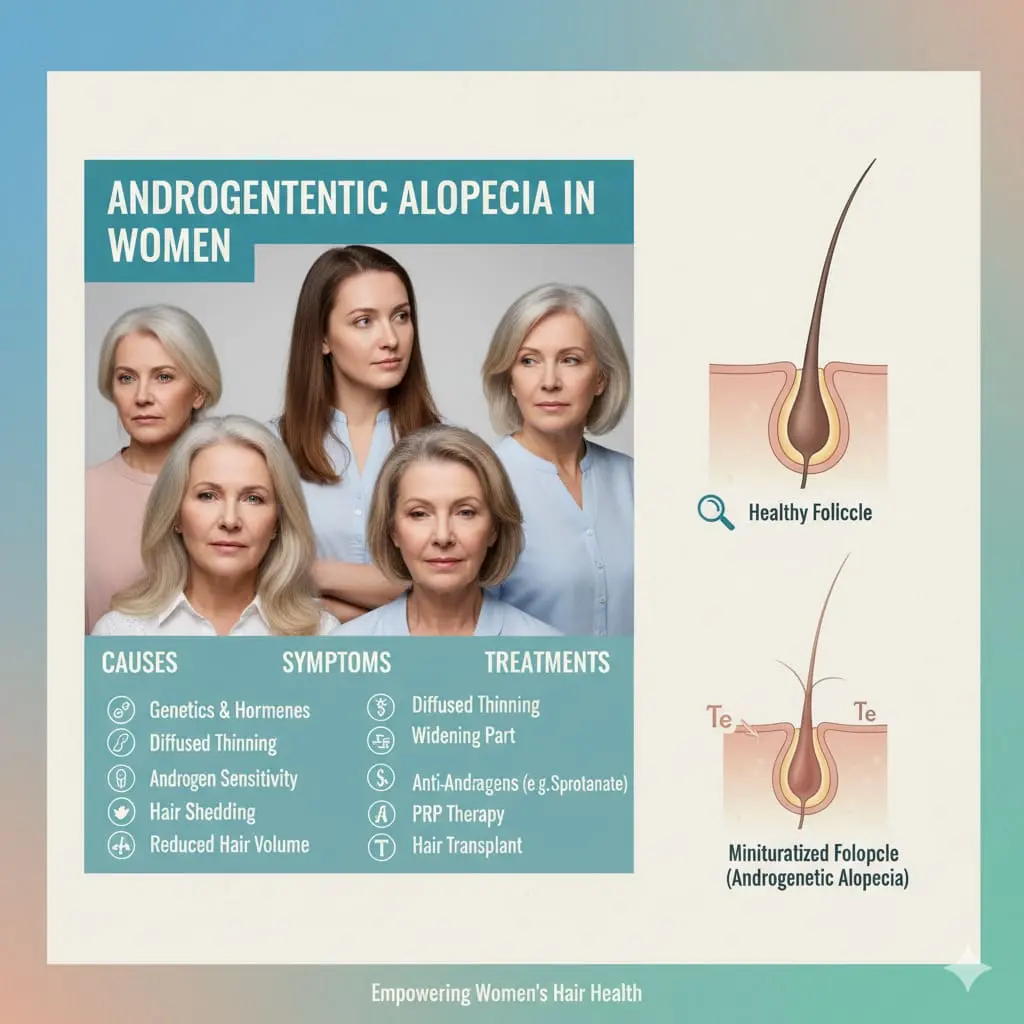
Androgenetic Alopecia in Women: Causes, Symptoms, and Treatments
Introduction
Hair is more than just beauty it’s confidence. But for many women, androgenetic alopecia (also called female pattern hair loss) becomes a frustrating reality. Unlike normal hair fall reasons such as stress or seasonal shedding, androgenic hair loss is linked to hormones and genetics.
If you’ve ever asked yourself “Why is my hair falling out?” or “What causes thinning hair in women?”, this guide will help you understand the problem and explore solutions for hair regrowth for ladies.
What is Androgenetic Alopecia in Women?
Androgenetic alopecia (AGA) is the most common type of female pattern baldness. It happens when hair follicles shrink under the influence of hormones called androgens. Unlike men, who experience receding hairlines and bald spots, women usually notice hair thinning at the crown and top of the scalp.
Key terms:
- Female pattern alopecia / female pattern hair loss → Thinning on the crown.
- Androgenic hair loss → Hormonal and genetic hair thinning.
- Male baldness in women → A term often used when women experience a similar hair loss pattern as men.
Symptoms of Female Pattern Baldness
- Gradual thinning hair on top of the head.
- Widening part line.
- More visible scalp under bright light.
- Hair feels weaker and breaks easily.
Unlike male pattern baldness, total baldness is rare in women.
Causes of Hair Loss in Women
Many factors contribute to hair loss in women. Let’s break them down:
1. Hormonal Causes
- Androgens (male hormones): These hormones shorten the hair growth cycle.
- Estrogen decline: After menopause, estrogen levels drop, leading to increased female pattern alopecia.
- Which hormone causes hair loss in females? → Mostly DHT (dihydrotestosterone), a byproduct of testosterone.
2. Genetic Causes
If your mother or grandmother had female pattern baldness, chances are you might too. Genetics strongly influence androgenetic alopecia in women.
3. Medical Conditions
- Thyroid problems
- PCOS (Polycystic Ovary Syndrome)
- Iron deficiency anemia
- Autoimmune diseases (like alopecia areata)
4. Lifestyle & External Factors
- Stress and anxiety
- Poor diet (lack of protein, iron, vitamins)
- Over-styling, heat damage, or harsh chemicals
Hair Fall Reasons in Women
If you’re wondering “What are the causes of hair fall?” or “Why does my hair keep falling out?”, here are common culprits:
- Hormonal imbalance (DHT, thyroid, estrogen changes)
- Genetics (family history of baldness)
- Stress (emotional or physical)
- Nutritional deficiencies (iron, vitamin D, B12, protein)
- Hairstyles that pull on roots (tight ponytails, braids)
- Medical conditions (PCOS, autoimmune disorders)
Difference Between Male & Female Pattern Baldness
| Feature | Male Pattern Baldness | Female Pattern Baldness |
|---|---|---|
| Hairline | Recedes at temples | Usually preserved |
| Bald spots | Common (crown area) | Rare |
| Thinning | Top & front | Crown and overall thinning |
| Complete baldness | Possible | Rare |
Treatments for Female Hair Loss
Good news: ladies’ hair loss can often be slowed, managed, or even reversed.
1. Medications
- Minoxidil (Rogaine): FDA-approved for female hair thinning.
- Anti-androgen pills: Like spironolactone, block hormonal effects.
- Hormone therapy: For women with PCOS or menopausal hair loss.
2. Non-Medical Options
- Laser therapy: Low-level light therapy stimulates follicles.
- Platelet-rich plasma (PRP): Uses your own blood to encourage regrowth.
- Hair thickening shampoos & serums: Provide volume while reducing breakage.
3. Surgical Treatments
- Hair Transplant Surgery: Moving healthy follicles to thinning areas.
- Scalp Micropigmentation: Cosmetic tattooing to mimic thicker hair.
4. Natural & Lifestyle Remedies
- Balanced diet (iron, protein, zinc, omega-3s)
- Stress management (yoga, meditation)
- Avoid heat styling & chemical damage
- Use mild, sulfate-free shampoos
Hair Regrowth for Ladies: Can It Really Happen?
Yes—depending on the cause. If hair loss is due to androgenetic alopecia, treatments like minoxidil, anti-androgens, and PRP therapy may restore partial regrowth. However, lifestyle changes (nutrition + stress control) play a big role too.
For women asking “Why is my hair falling out?”, early diagnosis is crucial. The sooner you treat female pattern hair loss, the better the results.
People Also Ask (PAA)
Q1: What causes hair loss in women?
Hormones, genetics, stress, nutritional deficiencies, and medical conditions can cause hair loss in women.
Q2: Which hormone causes hair loss in females?
DHT (dihydrotestosterone), a male hormone, is the leading cause of female pattern alopecia.
Q3: How do I know if I have androgenetic alopecia?
If your hair is thinning mostly on the crown with a widening part, it may be female pattern baldness.
Q4: Can female hair loss be reversed?
Yes, depending on the cause. Treatments like minoxidil, PRP, and lifestyle changes may promote regrowth.
Q5: Why does my hair keep falling out?
It could be stress, hormones, diet, thyroid issues, or androgenetic alopecia. A doctor can confirm the exact reason.
FAQs
What are the reasons for thinning hair?
Thinning hair in women can be caused by genetics, hormonal changes, stress, or poor nutrition.
Why is my hair falling out?
If you notice unusual hair fall, it may be due to hormonal imbalance, iron deficiency, stress, or female pattern hair loss.
What’s the difference between male and female baldness?
Men usually get bald spots and receding hairlines, while women mostly experience overall thinning on the crown.
Can women go completely bald?
Complete baldness is rare in women. They usually experience thinning hair rather than total loss.
What helps hair regrowth in women?
Minoxidil, healthy diet, PRP therapy, and stress management can all support hair regrowth for ladies.
Conclusion
Androgenetic alopecia in women is common but manageable. Whether you’re struggling with female hair thinning, female pattern baldness, or simply wondering “why is my hair falling out?”, there are solutions.
From medications and therapies to lifestyle changes, many women successfully slow or reverse hair loss. The key is early diagnosis, the right treatment, and consistent care.
If your hair loss keeps worsening, consult a dermatologist to get a customized treatment plan. Remember, you’re not alone and with the right care, healthier, fuller hair is possible.








Post Comment