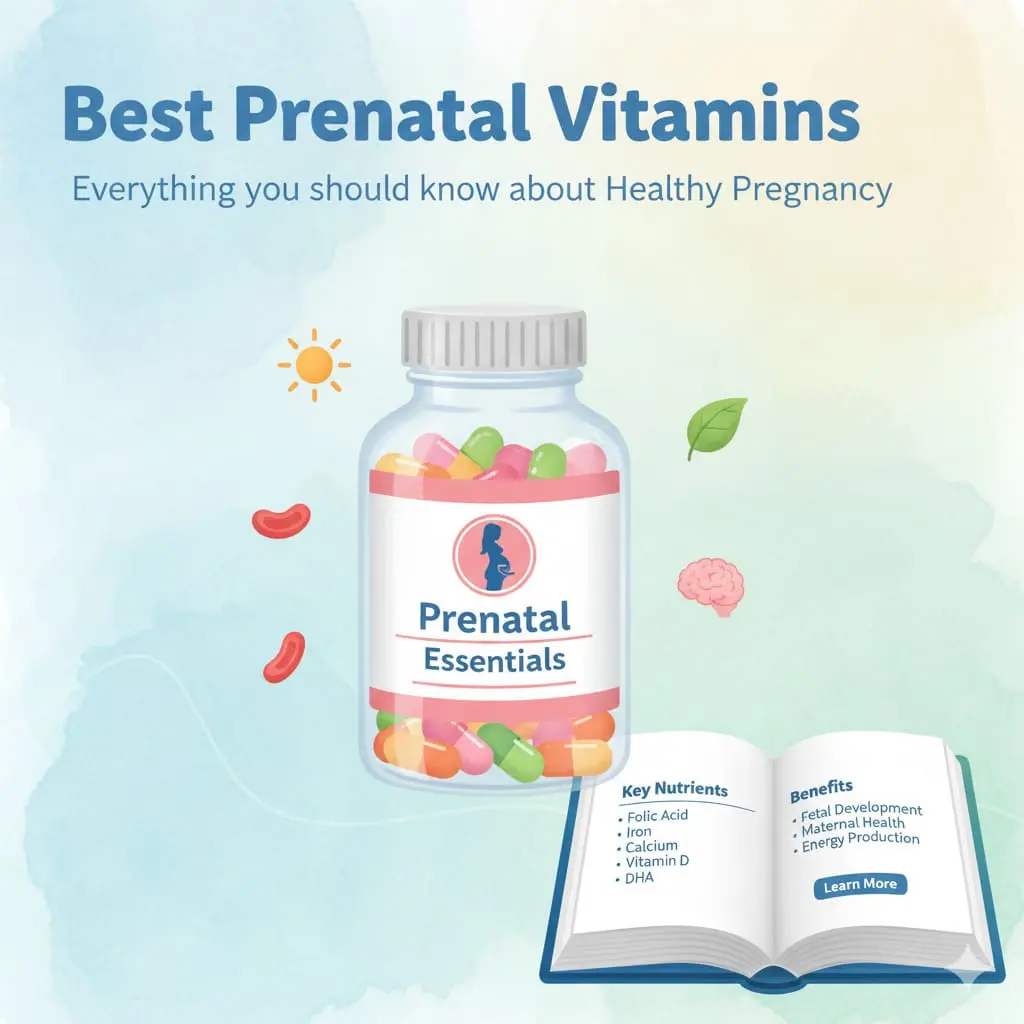
Best Prenatal Vitamins: Everything you should know about Healthy Pregnancy
Introduction
Pregnancy is a beautiful journey, but it comes with unique nutritional needs. Doctors often recommend prenatal vitamins to support both mother and baby’s health. These supplements are designed to fill nutritional gaps, reduce complications, and promote proper development during pregnancy. But with so many options natural prenatal vitamins, prenatal pills, multivitamins, or folate-based supplements it’s normal to feel confused.
This guide covers the benefits of prenatal vitamins, when to start taking them, and the most recommended options for expecting mothers.
What Are Prenatal Vitamins?
Prenatal vitamins are dietary supplements specifically made for pregnancy. Unlike regular multivitamins, they contain higher levels of folic acid, iron, calcium, and DHA nutrients essential for the growth of a healthy baby.
Folic acid/folate – prevents birth defects in the brain and spine.
Iron – helps prevent anemia and supports oxygen supply.
Calcium & Vitamin D – build strong bones and teeth.
Omega-3 DHA – supports brain and eye development.
Benefits of Prenatal Vitamins
Taking prenatal vitamins during pregnancy provides several benefits:
- Prevents birth defects – Folate reduces neural tube defects.
- Supports baby’s growth – Vitamins and minerals strengthen bones, brain, and organs.
- Boosts maternal health – Iron helps maintain energy and prevents anemia.
- Reduces pregnancy complications – Adequate nutrition lowers risk of preterm birth.
- Fills nutritional gaps – Especially for women with dietary restrictions.
Do Prenatal Vitamins Help You Get Pregnant?
This is a common question. While prenatal vitamins do not directly increase fertility, they prepare the body for pregnancy. Folic acid improves egg quality, iron reduces anemia risks, and overall nutrition supports reproductive health.
Answer: Prenatal vitamins don’t make you pregnant, but they help your body get ready for a healthy pregnancy.
When to Start Taking Prenatal Vitamins
Doctors recommend starting before conception ideally 3 months prior. If that’s not possible, begin as soon as you find out you’re pregnant. Continuing throughout pregnancy and even during breastfeeding ensures maximum benefits.
Answer : Start prenatal vitamins at least 3 months before trying to conceive and continue throughout pregnancy.
Most Important Vitamins for Pregnancy
The top nutrients every prenatal vitamin must include are:
- Folic Acid (400–800 mcg)
- Iron (27 mg)
- Calcium (1000 mg)
- Vitamin D (600 IU)
- Omega-3 DHA (200–300 mg)
- Iodine (150 mcg)
- Vitamin B12 (especially for vegetarians/vegans)
Best Prenatal Vitamins for Pregnancy
Here are the most recommended prenatal vitamins:
1. Best Natural Prenatal Vitamins
- Made with organic ingredients, plant-based folate, and non-synthetic minerals.
- Ideal for women with sensitive stomachs.
2. Prenatal Vitamins with Folic Acid
- Common choice to prevent neural tube defects.
- Usually recommended for most pregnancies.
3. Prenatal with Folate (Methylated Folate)
- Easier to absorb than folic acid.
- Best for women with MTHFR gene mutation.
4. Prenatal Multivitamin Pills
- Comprehensive nutrient support.
- Convenient for daily intake.
5. Top Recommended Brands (examples for SEO but not endorsing)
- One A Day Prenatal
- Nature Made Prenatal Multi + DHA
- Garden of Life MyKind Organics
Good Prenatal Vitamins: What to Look For
When choosing a prenatal vitamin, check if it has:
- At least 400 mcg folic acid/folate
- Adequate iron (27 mg)
- DHA/Omega-3s for brain development
- Calcium & Vitamin D for bone health
Vitamins During Pregnancy: Do You Still Need Food?
Yes. Prenatal vitamins supplement, not replace, a healthy diet. Pregnant women should still eat:
- Leafy greens, lentils, eggs, dairy, fish, fruits, and whole grains.
- Hydrate well and avoid excessive caffeine.
People Also Ask (PAA)
Q1: What are prenatal supplements?
A: Supplements designed for pregnancy that provide folic acid, iron, calcium, and DHA.
Q2: What vitamins are in prenatal vitamins?
A: Folic acid, iron, calcium, vitamin D, DHA, iodine, and B12.
Q3: What is the most recommended prenatal vitamin?
A: Any supplement with 400–800 mcg folic acid, 27 mg iron, and DHA.
Q4: Can I take prenatal vitamins before pregnancy?
A: Yes, ideally start 3 months before conception.
Q5: Are natural prenatal vitamins better?
A: They may be easier to digest, but both natural and synthetic options work if they meet nutritional requirements.







Post Comment